How to Choose the Right Fire Pump for Your Home Fire System?
How to Choose the Right Fire Pump for Your Home Fire System?
Your home fire system can only work as well as the pump that feeds it. If water pressure drops or supply falls short, sprinklers may not deliver the flow your home needs.
You need a pump that matches your water source, pipe layout, and system demand.
You choose the right fire pump by matching the required flow rate and pressure of your home fire system with the correct pump type and power source.
This means you review hydraulic demand, check available water pressure, and decide between electric or diesel drive based on site conditions.
In addition, you confirm that the pump meets local codes and standards in Australia.
This guide breaks down the key factors that shape your decision, from flow and pressure to installation and compliance.
You will see how each choice affects performance, safety, and long-term service, so you can move forward with clarity and confidence.
Key Considerations When Selecting a Fire Pump
You need to match your fire pump to your home’s water source, system design, and power setup. Clear planning helps you avoid low pressure, poor flow, and equipment that does not meet local fire rules.
Assessing Water Supply Requirements
Start by checking your water source. Your pump can only deliver what your supply can support.
If you use a town mains supply, confirm the static pressure and flow rate. Ask your water provider for test data, or arrange a pressure and flow test at your property.
If you rely on a tank, dam, or pool, measure the usable water volume.
You must allow enough water to support sprinkler heads or hoses for the required time, often 30 to 60 minutes.
Also, check the suction lift and pipe size. Long suction lines, sharp bends, or small pipes reduce flow. As a result, your pump may not reach its rated output.
Understanding Fire Pump Types
Different pump types suit different home fire systems. You should know the basic options before you decide.
Common types include:
- Centrifugal pumps for steady, high flow
- High-pressure pumps for long hose runs or elevated homes
- Portable petrol pumps for rural or bushfire areas
- Electric pumps for fixed sprinkler systems
Centrifugal pumps work well for most home sprinkler systems. They provide a consistent flow and simple operation.
High-pressure fire pumps suit properties with long driveways or high elevations. They maintain strong pressure at the nozzle or sprinkler head.
Electric pumps connect to mains power. However, you need backup power if blackouts occur during bushfires.
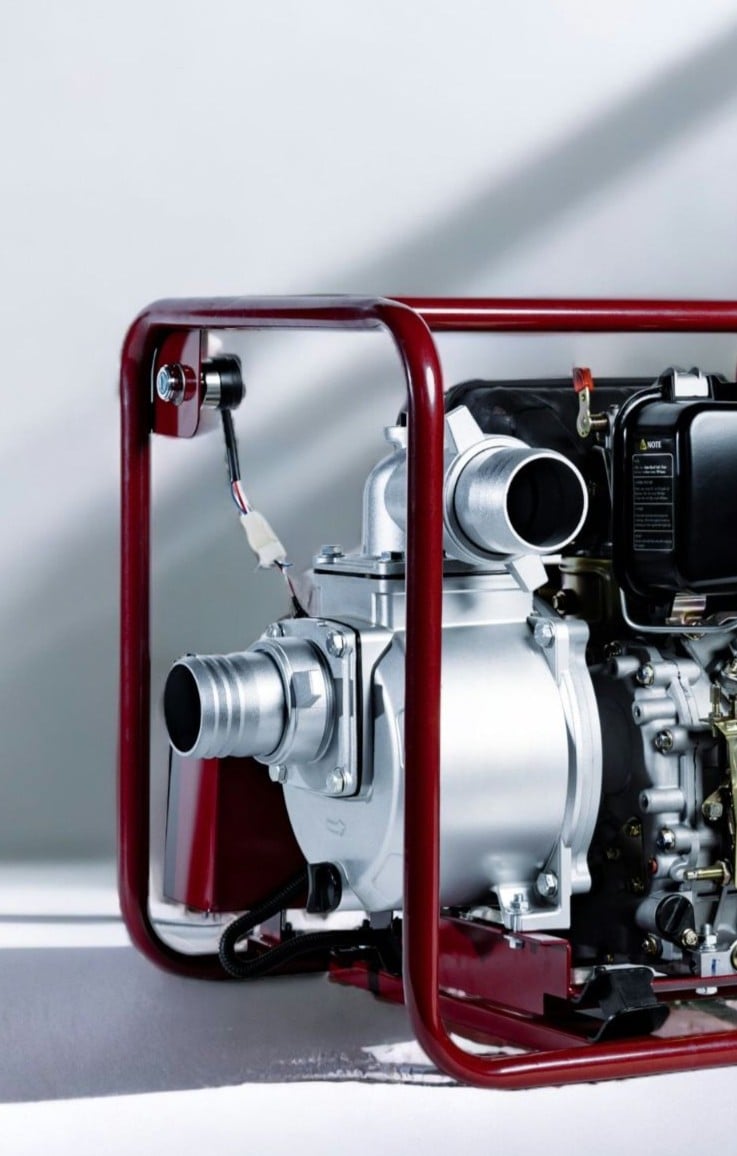
Petrol or diesel pumps run without grid power, which suits remote homes. Choose a design that fits your risk level and property layout.
When comparing your options, it helps to look at a wide range of fire pumps in AU or in NZ so you can see which models match your water source, pressure needs, and backup power setup.
Some homes need a simple fixed system, while others need something stronger for longer hose runs or higher ground.
Looking at different pump types side by side makes it easier to choose one that fits your property.
Determining Required Pump Capacity and Pressure
Your pump must meet both flow rate and pressure needs. These two factors work together.
Flow rate, measured in liters per minute, depends on how many sprinkler heads or hoses you plan to run at once.
For example, each sprinkler head may require a set flow to cover its area.
Pressure, measured in kilopascals or bar, must push water to the highest and furthest point in your system. Multi-story homes or sloped blocks need higher pressure.
Add losses from:
- Pipe length
- Pipe diameter
- Fittings and valves
- Elevation changes
You should base your calculations on the worst-case scenario, such as all zones active. Therefore, select a pump that meets the required flow and pressure at the same time, not just one figure in isolation.
Selecting Suitable Power Sources
Your power source affects how your pump performs during an emergency.
Electric pumps suit homes with stable grid power. They start easily and require less manual effort. However, bushfires often cause outages.
As a result, an electric-only setup may fail at the exact moment you need water.
Petrol or diesel engines operate without mains power. They suit rural and bushfire-prone areas. You must store fuel safely and service the engine at set intervals.
Some homeowners install a dedicated generator to support an electric pump. This setup adds cost but provides backup.
Check local regulations and noise limits before you decide. Also, confirm that your chosen power source meets Australian standards for home fire systems.
Ensuring Compliance and Reliable Installation
You need to meet legal standards and install your fire pump the right way to protect your home. Clear compliance, correct setup, and routine testing work together to keep your system ready for use.
Adhering to Australian Standards and Local Regulations
You must select a fire pump that complies with AS 2941, which sets design and performance rules for fire pump installations in Australia.
This standard covers flow rate, pressure, suction supply, and pump layout. It also sets rules for controllers and the power supply.
In addition, you need to follow local council and state fire regulations. Some areas, such as bushfire-prone zones, require a minimum water storage volume and a dedicated pump for fire use.
You may also need backflow prevention to protect the public water supply.
Therefore, confirm that your pump matches the required duty point, which includes the minimum flow rate and pressure your system must deliver.
A licensed fire protection professional can review your plans and confirm compliance before installation.
Installation Best Practices for Home Fire Pumps
You should install your pump on a solid concrete base to reduce movement and wear. Place it close to the water source to limit suction pipe length and reduce pressure loss.
Keep suction pipework short and straight. In addition, use the correct pipe diameter to prevent cavitation and low performance.
Fit isolation valves and pressure gauges so you can check system pressure at any time.
You also need a dependable power source. Many homes use an electric pump with a dedicated circuit; however, bushfire areas often require a diesel engine or backup generator in case mains power fails.
Protect the pump from weather with a ventilated enclosure, but allow enough space for service access.
Fire Pump Maintenance and Routine Testing
You must test your fire pump on a set schedule to confirm it operates as created. AS 1851 outlines routine service intervals for fire protection systems in Australia.
Each month, check for leaks, corrosion, loose fittings, and fuel or oil levels if you use a diesel unit. Start the pump and confirm it reaches the required pressure within the expected time.
Each year, arrange a full service by a qualified technician. This service should include flow testing to confirm the pump delivers the required liters per minute at the correct pressure.
Keep clear written records of all tests and repairs, as councils or insurers may request proof of maintenance.
Ready to Choose the Right Fire Pump?
You need a fire pump that matches your home fire system, water supply, and required pressure. Check flow rate, power source, and local rules so your system can deliver water at the right time.
Work with a licensed fire protection professional to size the pump and confirm correct installation and maintenance.
With the right pump in place, you protect your home and give your fire system the support it needs.
Do you have any questions about choosing the right fire pump for your home?
Sound off, below!
—Matt
PIN FOR LATER:
I am a contractor and just a DIY guy in my spare time. I love building things and sharing my knowledge with other DIY’ers. You can do anything you set your mind to! When I am not building or fixing something, I am all about baseball. Go Tigers, go!