Why Aren’t Pea Shoots Growing Properly? The Most Common Mistakes in Cultivation
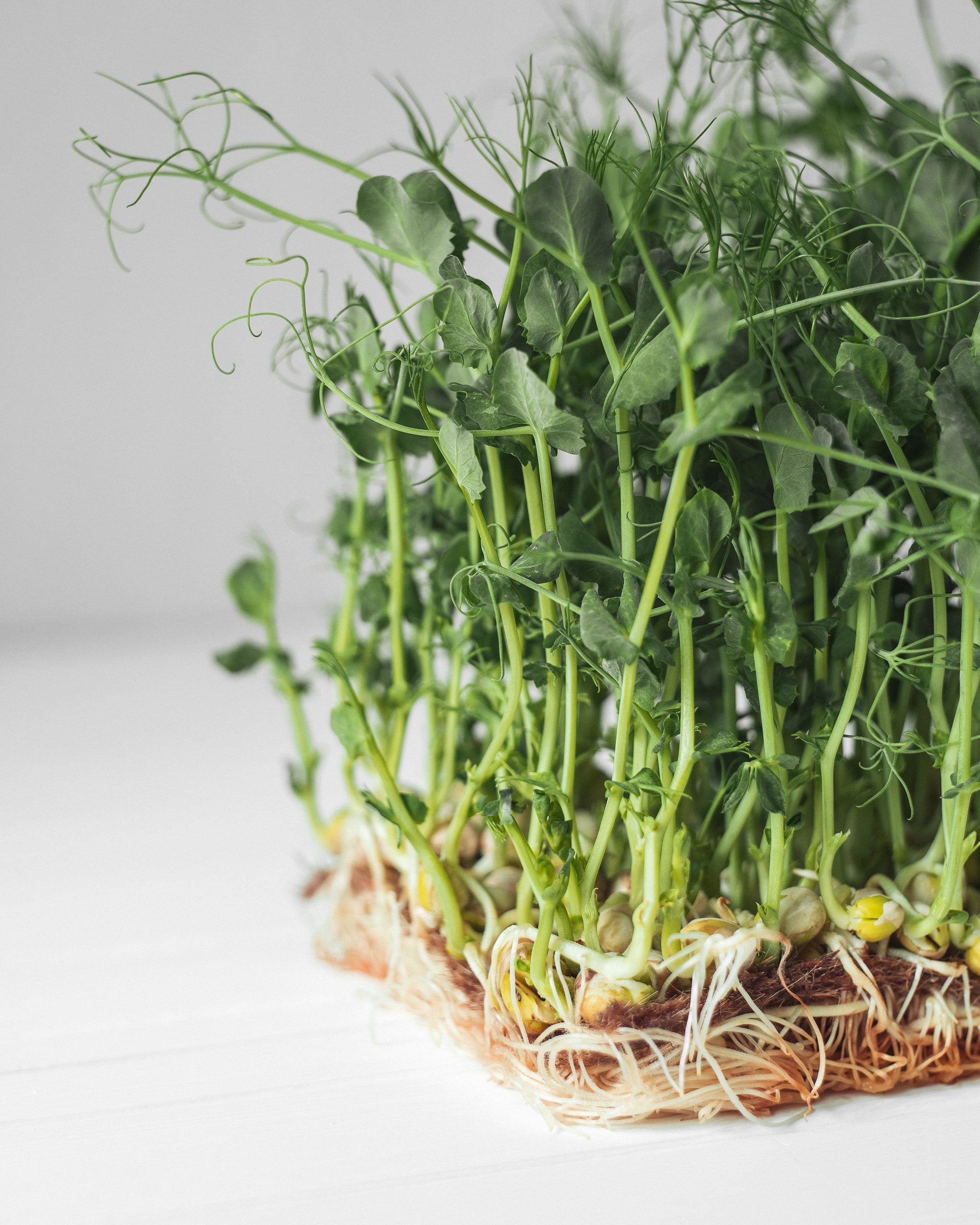
Why Aren’t Pea Shoots Growing Properly?
Growing pea shoots may seem simple, but even small mistakes can affect their appearance, growth rate, and overall yield.
Uneven germination, yellowing leaves, and mold development are common problems faced by both beginners and experienced growers.
Fortunately, most of these issues can be avoided by following proper cultivation practices.
Find out what to pay attention to when growing pea shoots to achieve healthy, crunchy, and evenly developed plants.
Why do pea shoots seeds germinate unevenly?
Uneven germination is one of the most common problems in microgreens cultivation. It can be caused by improper seed preparation, temperatures that are too low, or inconsistent moisture levels in the growing medium.
As a result, some plants develop faster while others are only beginning to germinate.
The planting material itself also plays an important role. Seeds with low germination rates can make it difficult to achieve uniform harvests.
That is why it is worth choosing reliable pea shoots seeds for growing, paying attention to germination performance and the characteristics of individual varieties.
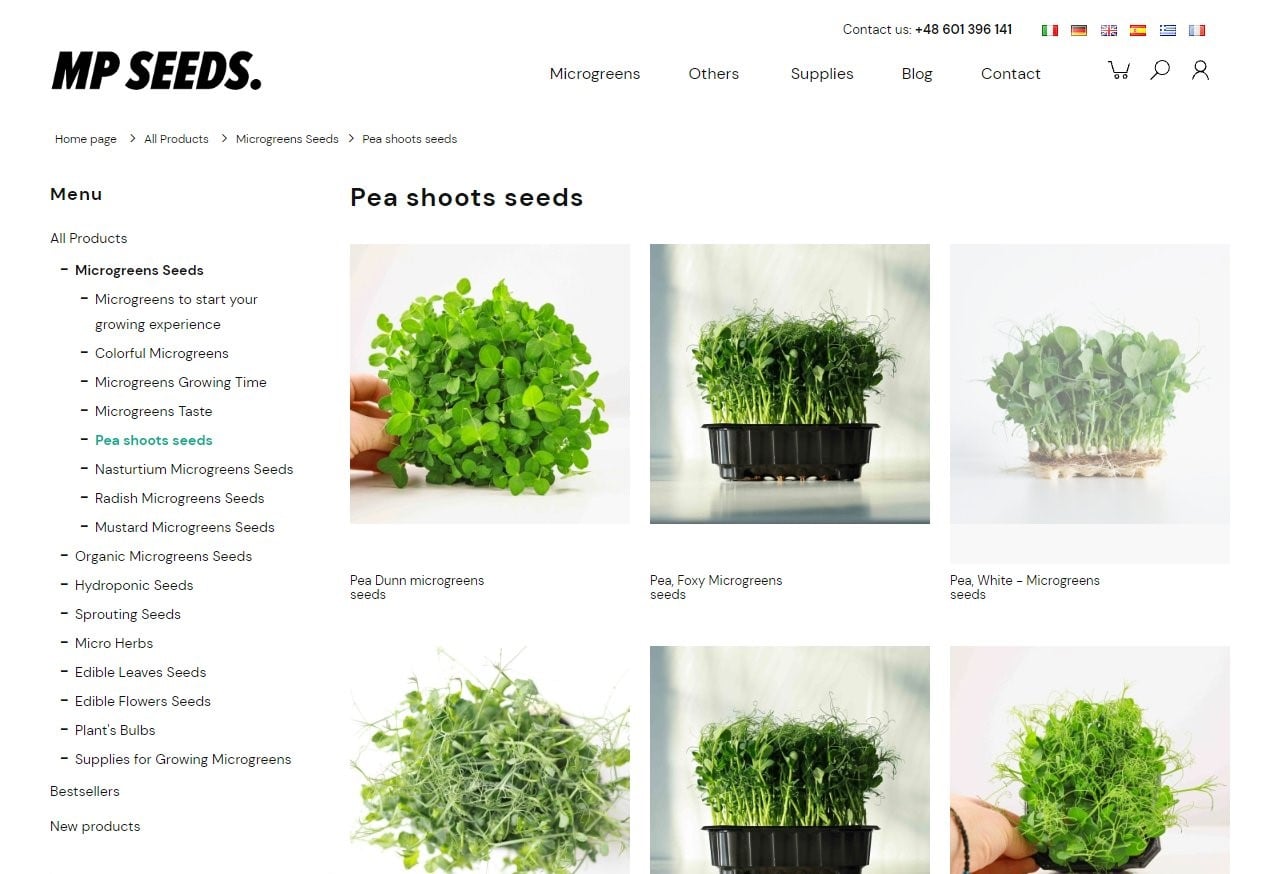
What are the most common mistakes when sowing pea shoots seeds?
Proper seed and growing medium preparation significantly affects the development of microgreens. One common mistake is skipping the soaking stage before sowing.
Peas have relatively large seeds, so soaking them beforehand helps prepare them for germination.
The most common mistakes include:
- soaking seeds for too short or too long;
- distributing seeds unevenly across the growing medium;
- sowing seeds too densely, which restricts airflow;
- using a growing medium with inappropriate moisture levels;
- failing to control the temperature during germination.
Each of these factors can negatively affect plant development.
Maintaining the right balance between moisture and airflow is particularly important, as overcrowded growing conditions can contribute to various cultivation problems.
Why does mold appear on pea shoots?
Mold is one of the most significant challenges in microgreens cultivation. Its development is encouraged by excessive moisture, high temperatures, and insufficient air circulation.
The problem can become more severe when seeds are sown too densely and the growing medium remains constantly wet.
To reduce the risk of mold, growers should regularly monitor growing conditions and avoid overwatering. Keeping containers, tools, and working surfaces clean is equally important.
It is also worth remembering that delicate white root hairs are sometimes mistaken for mold, so plants should be carefully examined before taking action. Microgreens with visible mold should not be consumed.
What causes pea shoots to turn yellow and become weak?
Yellowing pea shoots do not always indicate a serious problem. During the initial growth stage, when plants develop without access to light, their stems and leaves may appear pale or yellowish.
Once they are moved to a properly illuminated environment, they gradually develop their characteristic green color.
However, if yellowing continues despite adequate lighting, other growing conditions should be examined.
Weak plant development may result from improper watering, unsuitable temperatures, or restricted root growth. Identifying the cause early can help reduce the risk of crop losses.
How to improve growing conditions for pea shoots?
Producing healthy and evenly developed pea shoots requires regular monitoring of several essential factors. Peas grow best under stable conditions, so sudden changes in temperature or moisture can negatively affect their development.
During daily cultivation, it is important to provide:
- adequate lighting, which supports the development of green leaves and strong stems;
- controlled watering, which maintains moisture without waterlogging the growing medium;
- proper air circulation, which helps reduce the risk of mold development;
- regular plant monitoring, which makes it easier to identify potential problems early.
For professional growers, keeping records of germination times, growing conditions, and harvest yields can also be beneficial.
This information makes it easier to compare production cycles and gradually improve cultivation methods.
When is the best time to harvest pea shoots?
Harvest timing affects the flavor, appearance, and texture of young pea shoots. Pea shoots seeds are generally ready for harvesting after approximately 10-15 days, although the exact growing period depends on the variety and cultivation conditions.
Harvesting too early may result in lower yields, while allowing plants to grow for too long can produce less tender shoots.
Ideally, plants should be harvested when they reach the desired height, have well-developed leaves, and display their characteristic crunchy texture.
Clean, sharp tools should be used for cutting. Handling freshly harvested microgreens carefully also helps preserve their attractive appearance.
How to avoid problems and achieve successful harvests?
Successful pea shoots cultivation depends on combining suitable planting material with proper growing practices.
Choosing pea shoots seeds with good germination performance is an important first step, but maintaining appropriate moisture, temperature, lighting, and airflow is equally essential.
Regularly observing plants throughout their development, from germination to harvesting, helps identify potential issues before they affect the entire crop.
Well-planned cultivation makes it possible to produce fresh, flavorful, and visually appealing pea shoots.
By following essential growing principles and selecting suitable pea shoots seeds, even beginners can gradually achieve better and more consistent results.
Are you still troubleshooting why aren’t pea shoots growing properly?
Leave a comment below or reach out to share your setup, and let’s get your next batch growing strong.
—Matt
PIN FOR LATER:
I am a contractor and just a DIY guy in my spare time. I love building things and sharing my knowledge with other DIY’ers. You can do anything you set your mind to! When I am not building or fixing something, I am all about baseball. Go Tigers, go!