The Wachau in Autumn: Wine Villages, Apricot Country and the Danube Bend
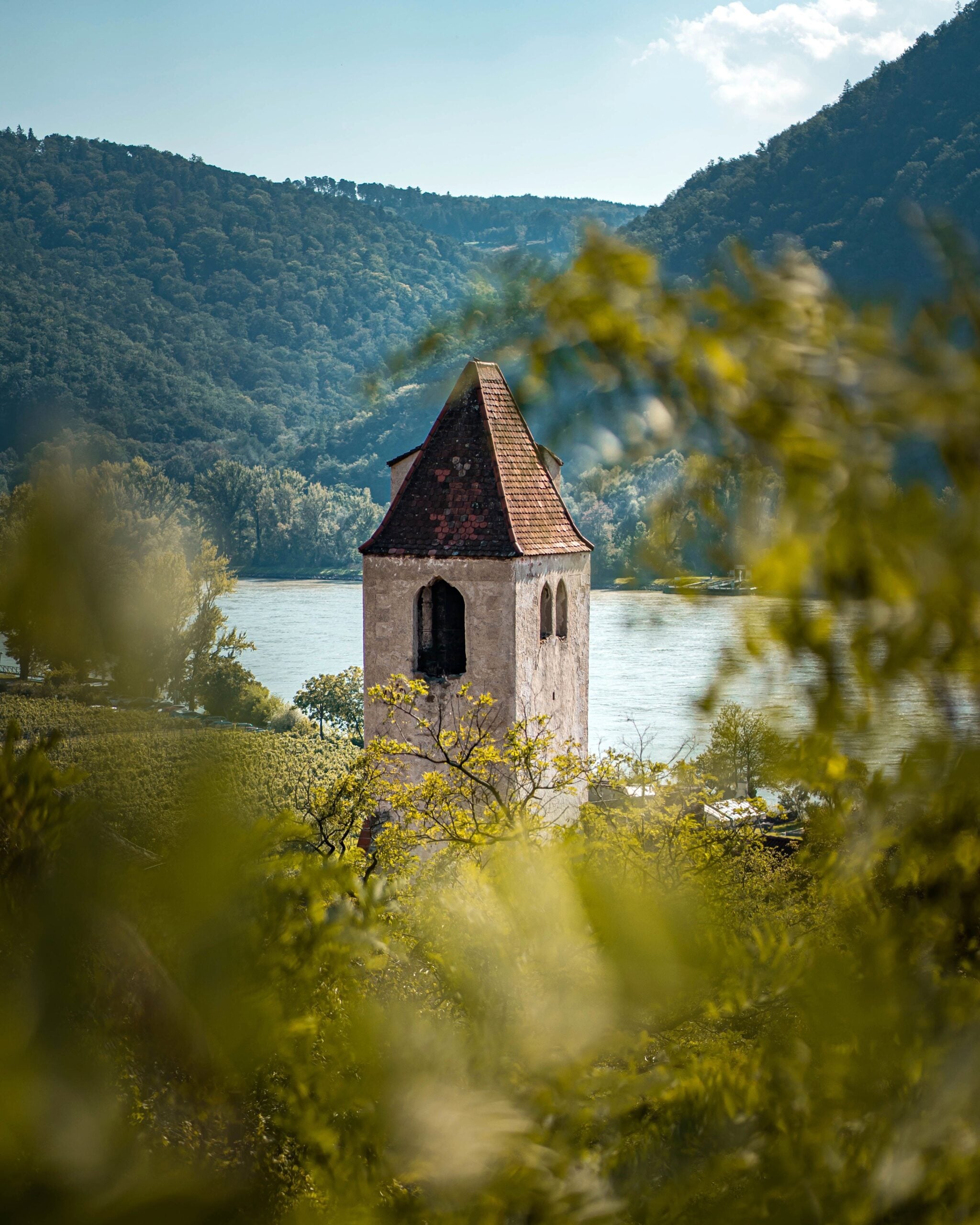
The Wachau in Autumn
The Wachau is roughly thirty kilometres of Danube between Melk and Krems, and for most of the year it behaves like a postcard of itself.
In October that stops.
The day boats thin out, the terraces turn the colour of weak tea, and the villages refill with people who have work to do before the frost.
UNESCO listed the valley in 2000 as a cultural landscape, which is a bureaucratic way of saying that the protected thing is not a monument but a working arrangement between people and a slope.
Monastic orders from Bavaria and Salzburg began terracing these hillsides more than a thousand years ago.
The dry stone walls holding the vines up are still the same technology, still repaired by hand, and still the reason the wine tastes as it does.
What the Terraces Are Actually Doing
Two grapes matter here. Grüner Veltliner takes the deeper, looser soils lower down, and gives you that peppery, faintly savoury white Austria has spent forty years teaching the rest of us to pronounce.
Riesling gets the steep primary rock, gneiss and granite under thin soil, and comes out tighter, stonier and longer-lived.
Picking runs through late September and October, and the ripest fruit hangs on into November, so walking the terraces in autumn means meeting people carrying crates down steps built for feet rather than machines.
Three words on the labels are worth learning before you order anything.
Vinea Wachau, the growers’ association, applies them to dry white wines grown entirely within the Wachau and made without oak.
Steinfeder is the lightest, up to 11.5% alcohol, named after a feather grass that grows on the walls; it is an afternoon wine, good with cold ham.
Federspiel sits in the middle, capped at 12.5%, and is the category most likely to make you happy at dinner. Smaragd, at least 12.5%, comes from the ripest fruit on the best sites and takes its name from the emerald lizard that suns itself on the stones; it is the serious bottle, and the expensive one.
This is not quite the quality ladder people treat it as. A good Federspiel beats a dull Smaragd every time.
Autumn will not hand you apricots.
The Wachauer Marille has protected designation status and a short season, roughly early July to the middle of August, so by October the fresh fruit is a memory.
What remains is the processed year: jam, nectar, dumplings, and a clear schnapps that is either excellent or faintly medicinal depending on who distilled it. Buy at a farm gate rather than from a souvenir shelf.
Melk, Dürnstein and the Space Between
Melk Abbey holds the western end from a rock above the town, a Benedictine house founded in 1089 and rebuilt by Jakob Prandtauer in the early eighteenth century into the most self-assured baroque building in the country.
Go for the library and the terrace view down the valley.
Dürnstein holds the other end with fewer than nine hundred residents and the valley’s most photographed profile: the blue and white tower of the former Augustinian collegiate church, rebuilt from 1710.
Above it stands the Kuenringer castle ruin, where Richard the Lionheart was held captive in 1192 and which Swedish troops wrecked in 1645.
The climb takes half an hour on loose stone and is worth it.
Between those two points is where itineraries fall apart. The wine villages are strung along both banks and the transport is not symmetrical.
A seasonal railway runs the north bank from Krems to Emmersdorf, calling at Dürnstein-Oberloiben, Weissenkirchen, Wösendorf-Joching, Spitz and Aggsbach-Markt, but it operates only from spring to mid-November and not daily outside the peak months.
This is usually the point at which visitors abandon the timetable and start moving around Austria once you leave the train line by road instead, which in this valley is less a surrender than an accurate reading of the map.
Melk is not on that line at all; it sits across the water on the main Vienna to Salzburg railway.
The south bank, with Rossatz, Aggstein and Schönbühel, has no train whatsoever, only a bus every hour or two and a few small ferries that stop for the winter.
Taxi 4 Travel handles precisely this category of journey, covering fixed-price transfers between Austrian towns, airports and the rural addresses that timetables treat as afterthoughts.
Whatever you use, plan the crossings rather than the kilometres. The distances here are trivial; the river is the obstacle.
What the Wachau Asks of You
Slowness, mostly. The Danube cycle path runs the length of the valley on both banks, flat and well surfaced and busy with people riding the whole Passau to Vienna route in a week.
In autumn the crowds ease and the late light on the terraces is worth arranging your day around. Two days is enough to see this properly; one day is enough to have been here.
It also asks that you buy something.
The economics of a terraced vineyard are terrible. Every wall repair, every crate carried down by hand, every parcel too steep for a tractor is a small argument against continuing, and the landscape you came to look at exists because a couple of hundred families keep losing that argument on purpose.
Sit down at a Heuriger with a jug of the young wine and take a bottle home with the producer’s name on it. That is not sentiment, it is the maintenance fee.
And give the small villages a night.
Spitz and Weissenkirchen empty out around six when the coaches leave, and what is left is a handful of lit windows, a church, and the sound of the river doing what it has always done while people rearranged the hillside above it.
A Few Words Before You Go
The Wachau is easy to admire and harder to understand until you slow down enough to see what holds it together.
The vineyards, dry-stone walls, wine villages and apricot orchards are not separate attractions but parts of the same working landscape, shaped over centuries and still maintained by people who live here.
Autumn makes that particularly visible, when the harvest is underway and the valley has shed much of its summer polish.
Come for the Danube and the views, but leave room for the things that do not appear on a sightseeing list.
A glass of Federspiel in a quiet Heuriger, a walk through a village after the day-trippers have gone, or a bottle bought directly from the grower.
The Wachau does not need to be rushed. Give it time, and the landscape becomes more than a postcard.
Have you ever experienced the Wachau in autumn?
Sound off, below!
—Darren
PIN FOR LATER:
I traded a desk for a backpack at 30 to see all 195 countries. I’m not just checking boxes; I’m finding the heartbeat of every nation. From off-the-beaten-path gems to world wonders. Follow my quest to see it all.