How to Choose Reliable Appliance Repair Services

Core Factors in Choosing Reliable Appliance Repair Services
When your refrigerator stops cooling, the initial instinct is often to call the first technician available. However, for premium appliances, this approach can lead to recurring problems or, worse, improper repairs that void your warranty.
The most reliable services prioritize factory certification, which means their technicians have undergone rigorous training specifically for high-end brands.
Beyond certification, look for companies that exclusively use Original Equipment Manufacturer (OEM) parts.
Generic components may fit, but they often lack the performance specifications required to maintain the precise temperature zones these refrigerators are known for.
Additionally, inquire about their warranty policy. A reputable service provider will stand behind their work with a comprehensive labor and parts warranty, usually spanning at least one year.
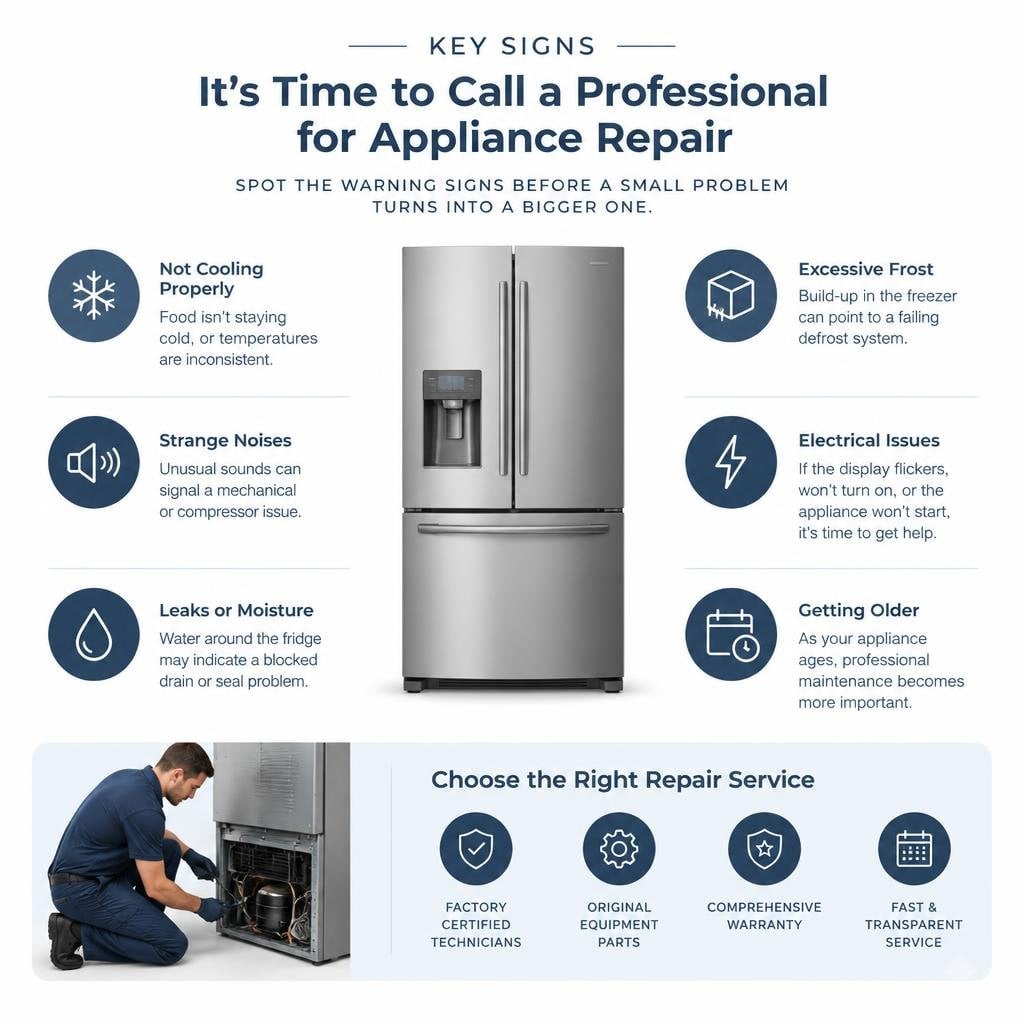
Availability is another significant factor. Because food spoilage is a major concern, companies that offer same-day or next-day service provide immense value.
Transparency in pricing, specifically regarding diagnostic fees versus total repair cost, is a hallmark of a professional firm.
If you are struggling to find a provider that meets these stringent criteria, seeking out expert refrigerator repair and maintenance is a proactive step toward ensuring your kitchen remains functional and your investment is protected.
Assessing Specialized vs General Appliance Repair Services
There is a distinct difference between a general handyman and a factory-certified technician. High-end refrigeration relies on sealed systems that contain pressurized refrigerant.
Handling these systems requires specialized vacuum pumps, recovery equipment, and an intimate knowledge of the specific electrical schematics unique to the brand.
A generalist might attempt to diagnose a cooling issue by checking the thermostat, but a specialist will use a multimeter to test thermistor resistance, check the voltage drop on DC components, and analyze the compressor control unit’s signal.
The following table illustrates why specialization matters:
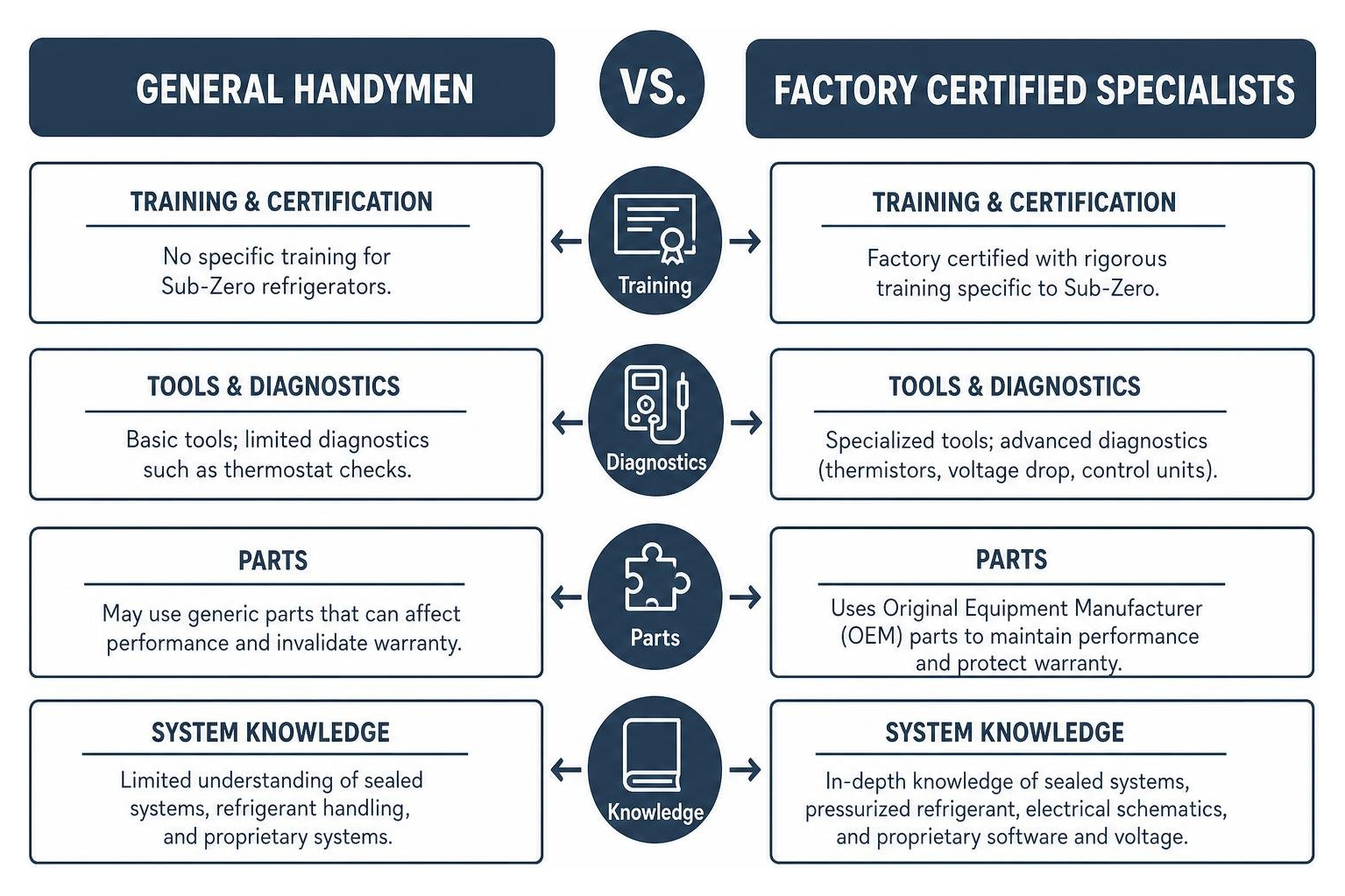
While a generalist might be suitable for minor tasks like changing a light bulb or leveling a unit, the complexity of a Sub-Zero refrigerator (which operates on specific voltage thresholds and proprietary software) demands a technician who understands the nuances of the manufacturer’s technical service manuals.
Understanding Labor Rates and Diagnostic Fees
Repair costs for premium appliances are influenced by several variables. Most professional companies charge a standard service fee just to arrive at your location and perform a diagnostic.
This fee covers the technician’s time, the specialized tools required for the visit, and the logistical costs of maintaining a fully stocked service vehicle.
Once the diagnostic is complete, the final price is determined by the complexity of the repair.
For instance, replacing a simple fan motor is significantly less labor-intensive than a sealed system repair, which involves refrigerant recovery, filter-drier replacement, and vacuum evacuation.
These tasks can take several hours, and the labor rate reflects the high level of technical expertise required to ensure the system is perfectly sealed and recharged to exact factory specifications.
To give you a realistic ballpark before you book a call, most certified appliance technicians charge between $95 and $150 just for the initial diagnostic visit, though many companies will roll that fee into your final bill if you approve the repair.
Replacing a straightforward component like an evaporator fan motor, thermistor, or water inlet valve usually lands between $225 and $475 total for parts and labor.
If you are dealing with a major sealed system failure on a built-in unit like a Sub-Zero, such as a dead compressor, leaky evaporator coil, or full refrigerant recharge, expect to pay anywhere from $850 to $1,800 or more due to the specialized recovery equipment and multi-hour labor involved.
Diagnosing Complex Refrigeration Failures
When a refrigerator malfunctions, the control board often acts as a diagnostic tool. Modern high-end refrigerators are designed to communicate through error codes.
If you see an alert on your display, it is rarely a random glitch; it is the system telling you exactly where the failure lies.
Understanding Digital Error Codes and Alarms
Error codes are your first line of defense. For example, an E3 code often signals a compressor start issue, which could stem from an unbalanced refrigerant system or a temporary power fluctuation.
Other codes might indicate a thermistor failure, where the sensor reading falls outside the expected range (typically 8-14 kilo-ohms at room temperature).
If a fan is drawing too much current, the system may flash an error to prevent the main circuit board from overheating.
Before calling for help, note the specific code or the pattern of the flashing light.
This information allows the technician to arrive with the correct parts already in their truck, potentially saving you a second visit.
Sealed System Diagnostics and Refrigerant Recovery
The sealed system is the heart of your refrigerator. It includes the compressor, evaporator, condenser, and the lines connecting them.
If this system becomes contaminated or restricted, the refrigerator will lose its ability to cool. Repairing this is the most involved process in appliance maintenance.
It requires the technician to recover the existing refrigerant, replace the faulty component, install a new filter-drier to remove moisture, perform a deep vacuum evacuation to purge the system of air, and finally, recharge it with the exact weight of refrigerant specified by the manufacturer.
Since this process is time-consuming and requires specialized, expensive equipment, it is naturally the most costly type of repair.
Preventive Maintenance and Component Care
The best way to avoid a major repair bill is to perform routine maintenance. Just as a car requires oil changes, your refrigerator requires regular attention to its condenser coils and air circulation paths.
DIY Troubleshooting Limits Before Calling Appliance Repair Services
As a contractor, I always tell homeowners to start with the simple stuff before paying for a service truck to roll up.
I have walked into plenty of kitchens where a “broken” fridge just had a tripped GFCI outlet behind the cabinets or condenser coils completely choked out with pet hair.
Taking ten minutes to vacuum the coils and check your breaker can save you a $120 service fee.
That said, the minute you see frost building up on the back interior wall or hear the compressor clicking repeatedly without turning over, put the tools down and call a certified pro.
Other things you can do is ensure the temperature dials are set to the manufacturer’s recommended levels.
You can also use a vacuum with a brush attachment to clear dust from the condenser coils, which helps the system reject heat more efficiently.
If the issue involves the electrical wiring behind the control panel or any part of the sealed system, stop immediately.
These areas involve high-voltage electricity and pressurized chemicals that should only be handled by a professional.
Clearing Drain Lines and Moisture Buildup
If you notice water pooling behind the crisper drawers or leaking onto the floor, your drain tube is likely clogged or frozen.
This is a common issue caused by food particles or ice buildup. You can often resolve this by turning off the unit and using a turkey baster to flush the drain trough with a mixture of hot water, a few drops of dish soap, and a capful of bleach.
Never use a sharp object or a metal wire to clear the tube, as you risk puncturing the plastic and creating a much larger repair problem.
If the water continues to leak after a thorough cleaning, it may indicate a deeper issue with the defrost cycle that requires professional intervention.
Frequently Asked Questions About Refrigerator Repair
How much does a standard sealed system repair typically cost?
Costs vary based on the specific model, the extent of the contamination, and the labor required. Because these repairs involve multi-hour processes—including refrigerant recovery, component replacement, and vacuum evacuation—the pricing reflects the high level of skill and the specialized tools used. Always request a detailed estimate from your technician before they begin the work.
What are the main signs of a clogged refrigerator drain line?
The most common indicators are water pooling inside the unit, particularly beneath the crisper drawers, and water leaking from the front of the refrigerator onto the floor.
If you notice ice forming in the drain trough or at the back of the interior, it is a clear sign that the drainage path is blocked.
How often should condenser coils be cleaned on premium refrigerators?
For most households, cleaning the condenser coils once a year is sufficient. In homes with pets or high levels of dust, you may need to clean them every six months.
Keeping these coils clean allows the refrigerator to release heat efficiently, which reduces the workload on the compressor and significantly extends the lifespan of the entire unit.
Hiring the Right Technician for Your Home
A good high-end fridge is built to last twenty years or more, so it is worth spending the extra time to find a tech who actually knows the brand inside and out. A
sk about factory certifications, make sure they use OEM parts, and get the warranty terms in writing before they start tearing things apart.
Taking those few extra minutes up front will keep your kitchen running smoothly and save you from paying twice for the same repair.
Are you looking for reliable appliance repair services?
Drop a comment, below!
—Matt
PIN FOR LATER:


I am a contractor and just a DIY guy in my spare time. I love building things and sharing my knowledge with other DIY’ers. You can do anything you set your mind to! When I am not building or fixing something, I am all about baseball. Go Tigers, go!