Natural Stone Coffee Tables in Australia: Complete Buyer & Care Guide
Natural Stone Coffee Tables in Australia
A natural stone coffee table can give an Australian living room a grounded, lasting focal point. Whether you are furnishing a compact Sydney apartment, a Melbourne terrace, or a relaxed coastal home, the right piece should feel proportionate to the room and practical for daily life.
Exploring travertine coffee tables in Australia is a useful starting point for anyone drawn to warm tones, tactile finishes, and sculptural forms.
Stone is visually substantial, so it deserves more planning than a lightweight timber or glass table.
Consider the room’s traffic flow, the piece’s weight, the finish you can maintain, and how often the table will hold cups, snacks, books, remotes, or children’s activities.
Why Natural Stone Works in Living Rooms
Natural stone brings texture, color variation, and visual weight to a seating area. No two slabs are identical, which means small differences in veining, pores, and tonal movement should be treated as part of the material’s character.
Travertine can complement coastal, Japandi, modern, and warm minimalist spaces, while marble can create a more formal or high-contrast look.
However, durability does not mean zero maintenance.
Many natural stones are porous or sensitive to acidic liquids, and a table that looks beautiful in a showroom still needs thoughtful everyday use at home.
How to Choose the Right Size
Start with the sofa and the full seating zone, not the empty floor in the center of the room. A coffee table should sit close enough to the sofa to reach comfortably from it.
All while leaving clear space to walk around it, sit down, and use nearby furniture.
Useful Measuring Steps
- Mark the proposed footprint with painter’s tape.
- Walk around the outline from every likely entry point.
- Use cardboard or sheets of paper to test the table’s scale.
- Check that recliners, drawers, and doors can open freely.
- Measure lifts, stairwells, hallways, and doorways before arranging delivery.
Selecting a Shape for Better Flow
- Round: A practical option in smaller rooms, beside corner sofas, or in busy walkways, because there are no sharp corners to navigate.
- Oval: Useful when you want the length of a rectangular table with softer edges.
- Square: Best suited to balanced seating arrangements with enough open space around all sides.
- Rectangular: A natural match for long sofas, sectionals, and broad central seating zones.
- Nesting tables: Flexible for entertaining, as the smaller surface can be pulled out when needed and tucked away later.
Comparing Popular Stone Materials
- Travertine: Often recognized by its warm beige, cream, or earthy tones and naturally textured appearance. It suits relaxed interiors but benefits from prompt spill care and appropriate sealing.
- Marble: Known for distinctive veining and a refined finish. It can mark or etch when exposed to acidic substances, so coasters are especially important.
- Granite: A dense natural stone available in a wide range of colors and patterns. It can be a practical choice, although its care needs still depend on the finish and sealing.
- Limestone: Offers a softer, muted look that works well in quiet, tonal interiors. It requires gentle cleaning because it is sensitive to acids and abrasion.
What to Check Before Buying
Ask the retailer to confirm the specific stone, surface finish, and sealing requirements. Inspect the tabletop thickness, base construction, and connection points.
Ensure the table sits level and does not wobble.
Smoothly finished edges matter in every home, particularly where young children are likely to play nearby. Also, confirm how the piece will be packed, carried, and placed, since stone furniture can be difficult to move once delivered.
How to Style the Table
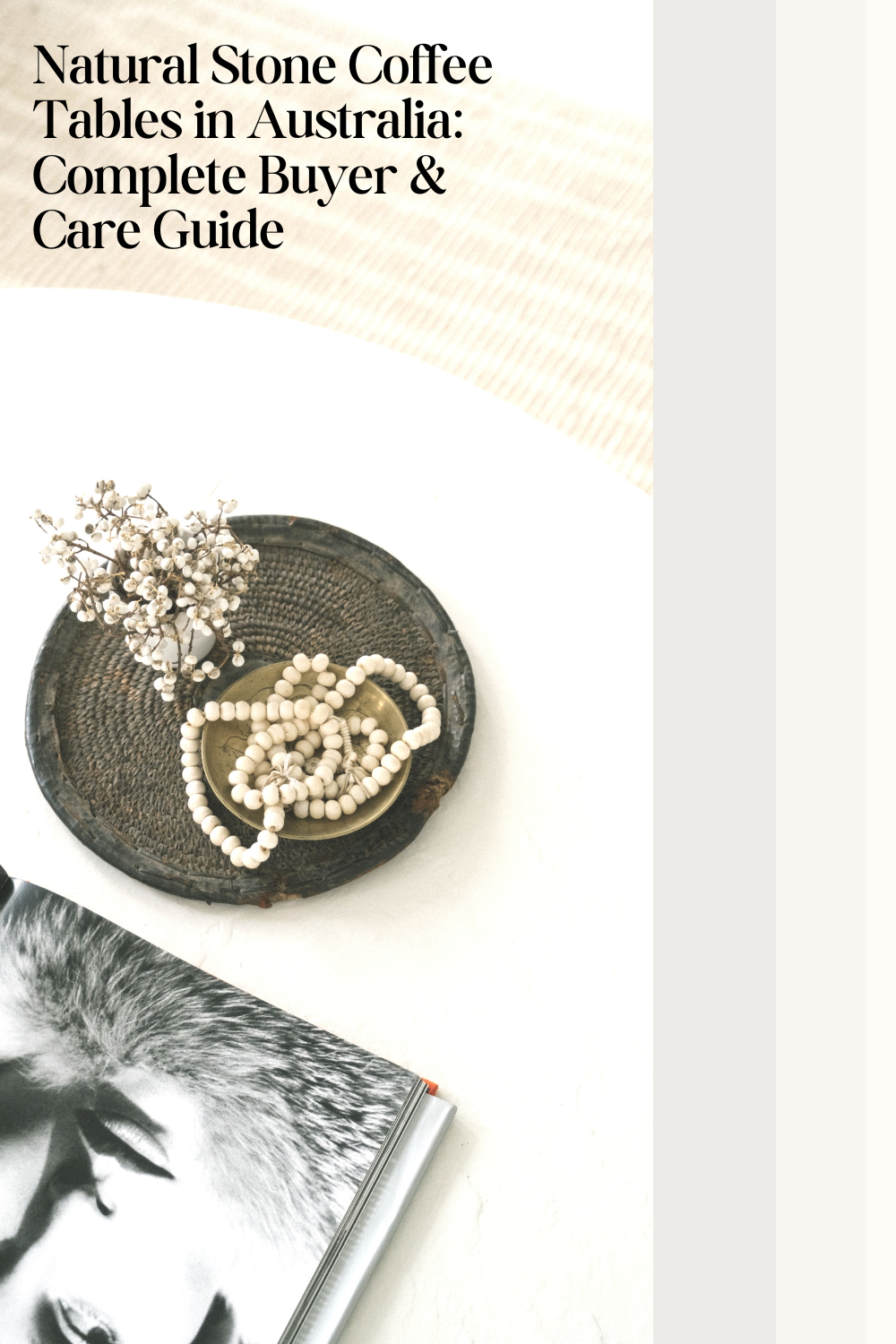
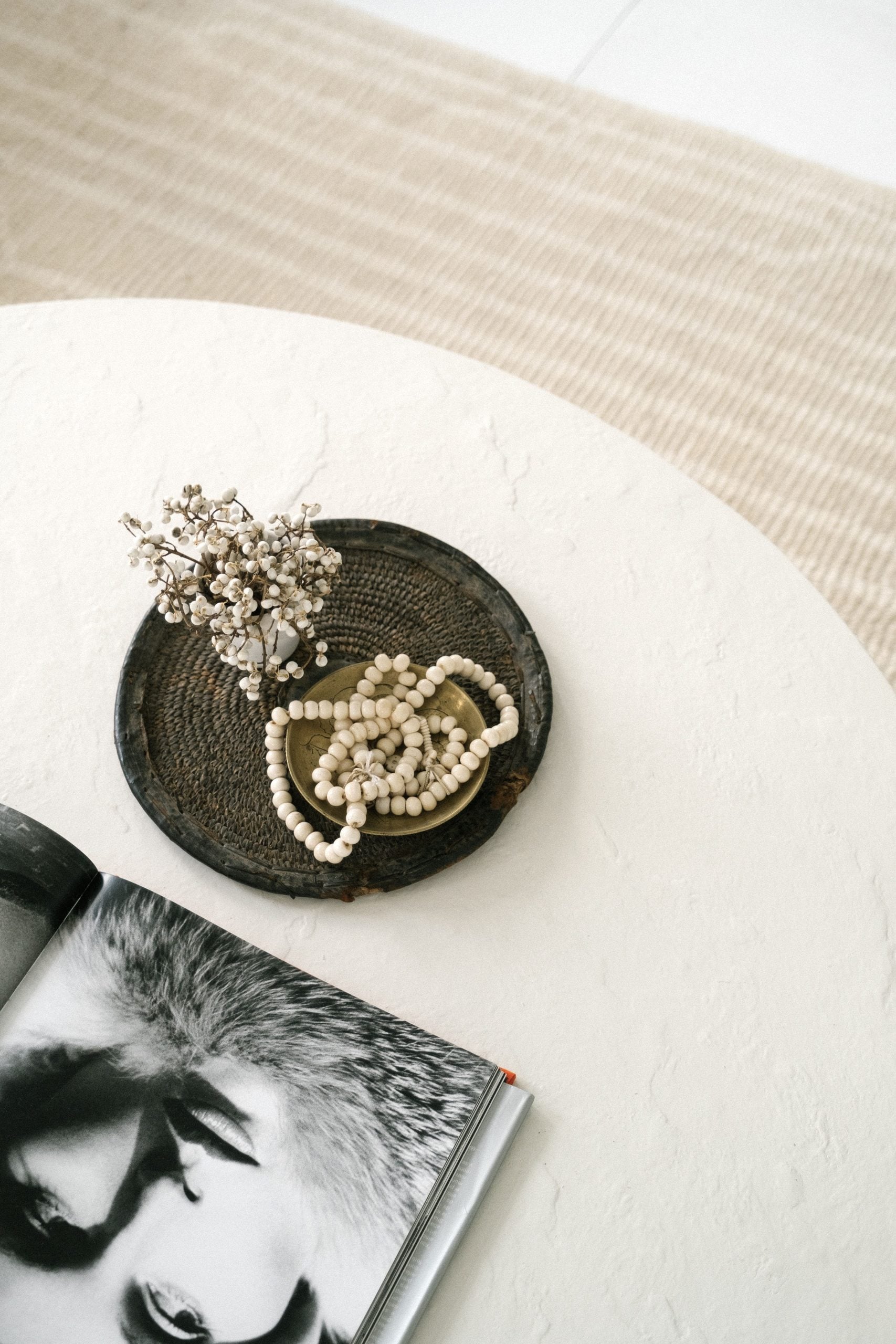
The most successful styling leaves room for real life. Begin with one practical anchor, such as a low tray or bowl, add a taller vase or sculptural object.
Then introduce a book, magazine, or small ceramic piece. Finish with a natural texture such as greenery, timber, or linen, but keep a clear section for drinks and remotes.
For round tables, use one central composition that looks balanced from all angles.
On rectangular tables, a longer tray or low arrangement can echo the shape. Square surfaces often look more relaxed with an offset grouping rather than a rigid display in the middle.
Natural Stone Coffee Table Directions
Current decorating ideas favor personality over a perfectly matched display, with meaningful objects, organic forms, and collected materials helping tables feel more personal.
The latest coffee table styling trends for 2026 also point toward edited arrangements that tell a story rather than dense stacks of identical accessories.
For a stone table, this translates well into warm timber, handmade ceramics, linen-covered books, low greenery, and one or two personal objects.
Honed finishes, rounded profiles, and sculptural bases can soften rooms filled with straight-lined cabinetry, televisions, and modular sofas.
Cleaning and Maintenance Basics
- Blot spills promptly with a soft, clean cloth.
- Use a pH-neutral cleaner intended for natural stone, following the supplier’s care instructions.
- Avoid vinegar, lemon juice, abrasive powders, and harsh bathroom cleaners.
- Place coasters under drinks and mats beneath hot serving dishes or plant pots.
- Lift objects instead of dragging them across the surface.
- Seek professional advice for significant staining, etching, chips, or cracks.
Common Mistakes to Avoid
- Buying before measuring the room and the delivery route.
- Choosing a visually heavy table for a small or lightly scaled sofa.
- Assuming natural variation means every slab will look exactly like a product image.
- Overcrowding a beautiful stone surface with accessories.
- Using acidic cleaners or leaving drinks directly on an unprotected tabletop.
Frequently Asked Questions
Are natural stone coffee tables suitable for families?
They can be, provided the table has an appropriate edge profile, a stable base, and a finish suited to regular use. Coasters, quick spill cleanup, and realistic expectations about natural variation are also important.
Which shape is best for a small living room?
Round and oval tables are often useful in tight circulation because their curved edges can make pathways feel easier to use. The final choice should still reflect the sofa length and available floor space.
How often should a stone coffee table be resealed?
There is no universal schedule. The right timing depends on the stone, finish, sealer, and level of use, so follow the manufacturer’s instructions for the specific table.
Can a stone coffee table make a room feel warmer?
Yes. Pair it with wool, linen, timber, woven fibers, warm lighting, and an earthy rug. These materials create softness around the stone without concealing its natural character.
Final Thoughts
A natural stone coffee table needs to be as practical as it is beautiful. Selecting the right size and caring for it properly ensures your living room centerpiece remains useful, calm, and distinctly personal for years to come.
Are you looking to add natural stone coffee tables to your home?
Drop a comment, below!
—Jeanine
PIN FOR LATER: