Creating Your Dream Backyard: Custom Pool Construction and Design
Looking for Custom Pool Construction for Your Home?
Creating a dream outdoor living space starts with choosing the right pool deck material. For custom gunite pool construction, two top contenders are natural travertine and high-performance porcelain pavers.
This guide compares their thermal performance, durability, maintenance needs, and lifecycle costs to help you select the ideal surface for your home.
For those embarking on a custom gunite pool construction project, understanding these differences is key to crafting a resilient and beautiful outdoor living space.
The right decision ensures your pool deck remains a cherished part of your home for decades.
The selection of pool deck materials is a pivotal decision in any custom pool project. Beyond mere aesthetics, the chosen surface significantly impacts the functionality, comfort, and overall longevity of your outdoor oasis.
Homeowners in Florida, for instance, must consider how materials will perform under intense sun, humidity, and potential exposure to saltwater.
The texture of the surface dictates barefoot comfort and slip resistance, while its visual appeal must seamlessly integrate with the home’s architectural style and the surrounding landscape.
Making an informed choice between materials like travertine and porcelain ensures that your pool deck is not just beautiful but also practical and enduring.
Evaluating Travertine for Custom Pool Construction
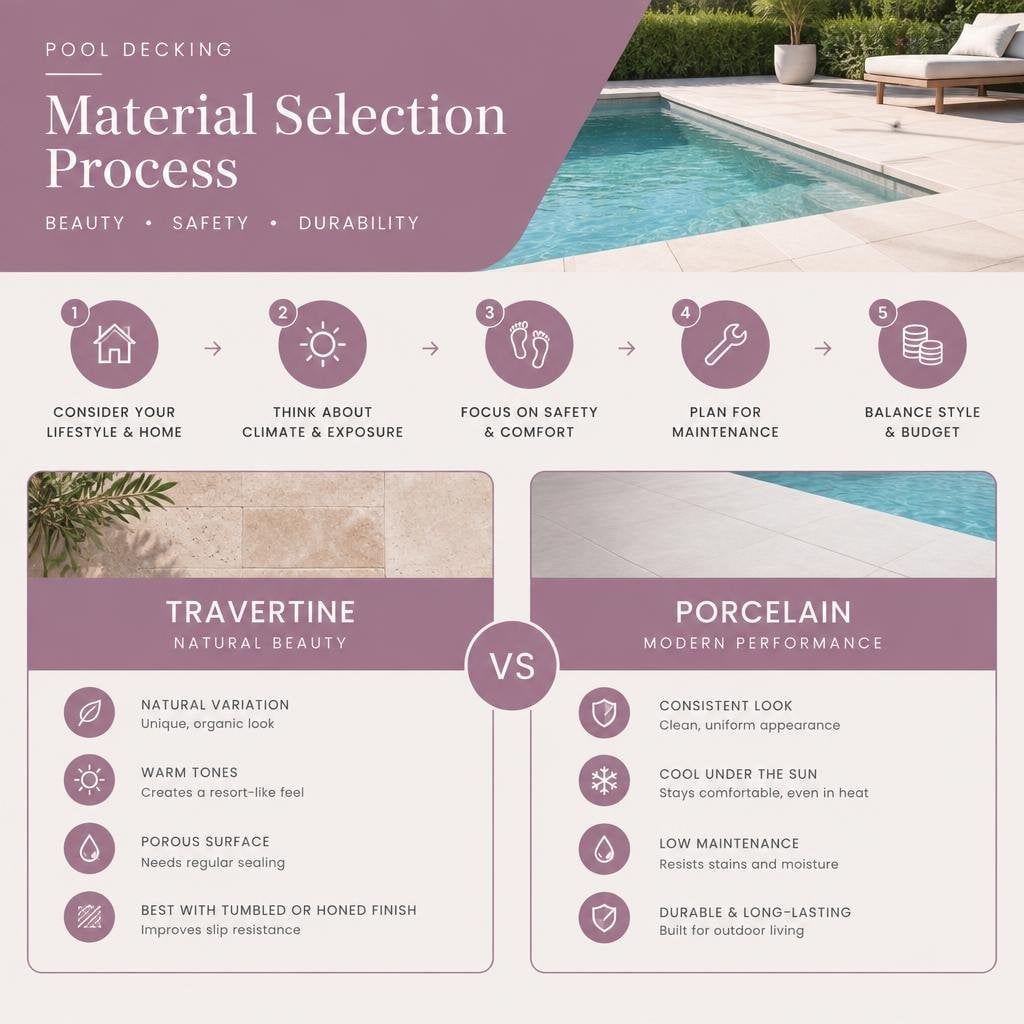
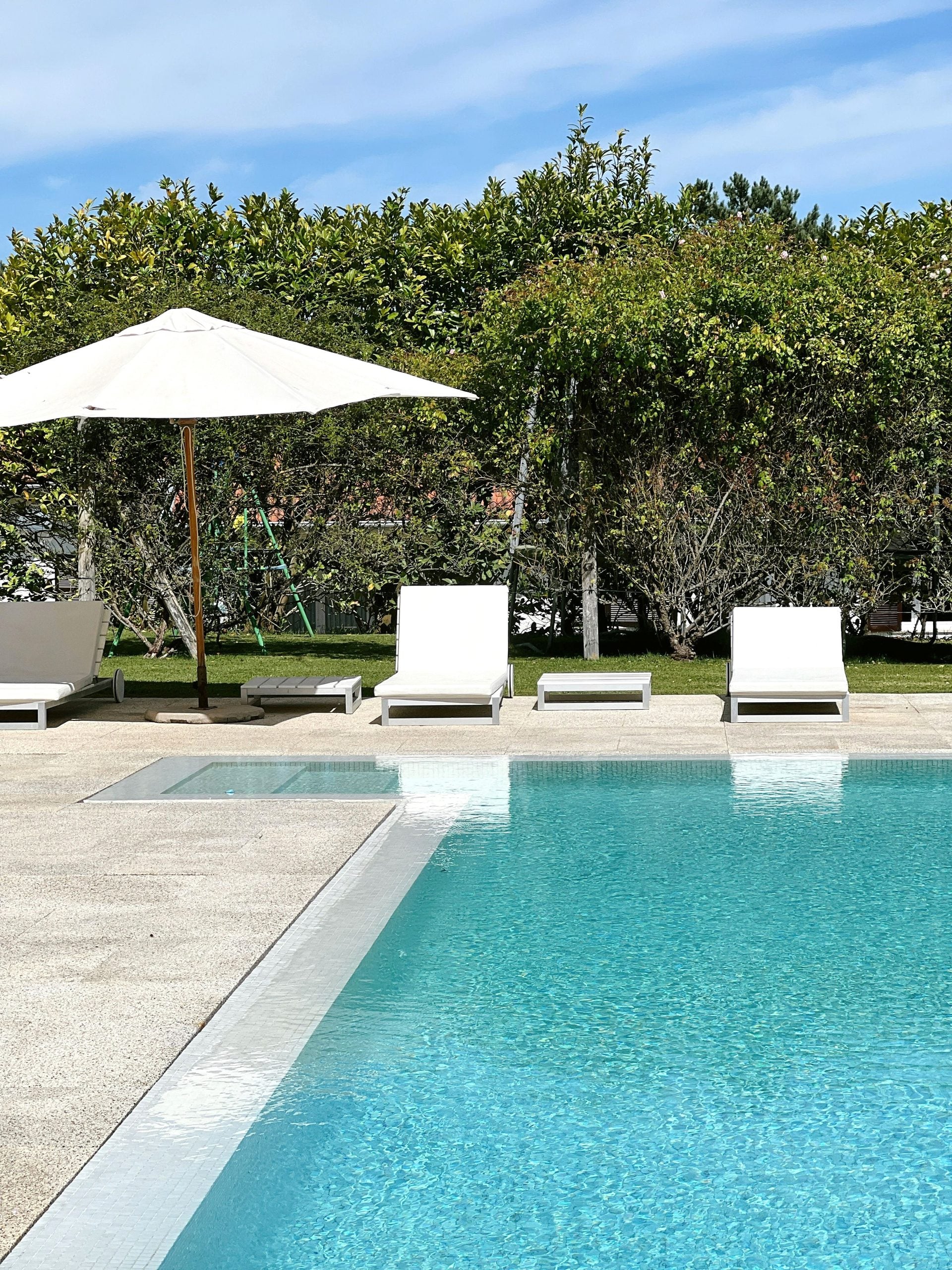
Travertine, a natural limestone, offers rich earthy tones and organic variation that evoke a resort-like ambiance, often laid in French patterns.
However, its natural porosity requires regular maintenance. To prevent moisture absorption, dirt buildup, and staining, travertine needs sealing every one to two years outdoors.
For safe, slip-resistant pool decks, tumbled or honed finishes are essential, as polished travertine becomes slick when wet.
Integrating Porcelain Pavers in Custom Pool Construction
Porcelain pavers are a vitrified, high-performance alternative to natural stone. Fired at extreme temperatures, porcelain features near-zero water absorption (under 0.5%), making it inherently resistant to moisture, stains, and pool chemicals.
Available in large formats (like 24×24 or 24×48 inches), textured or matte porcelain (rated R11 or higher for slip resistance) provides a sleek, modern aesthetic with uniform color and minimal upkeep.
Thermal Performance and Climate Considerations
Barefoot comfort varies significantly by climate and material choice:
- Hot Climates: Light-colored travertine naturally reflects radiant heat, staying 15–20°F cooler underfoot than standard concrete or darker pavers. For hot regions like Florida, California, or Arizona, light-colored travertine or high-albedo, textured porcelain in light shades are best for barefoot comfort.
- Cold Climates: Porcelain significantly outperforms travertine in freeze-thaw conditions. Its vitrified, non-porous structure resists cracking and spalling when temperatures drop. Travertine’s porous nature makes it vulnerable to freeze-thaw damage if moisture penetrates and freezes within the stone.
Slip Resistance, Durability, and Pool Chemistry
Beyond comfort, deck materials must handle heavy exposure to water and chemicals:
- Slip Resistance: Both materials are safe when specified correctly. Use tumbled or honed finishes for travertine, and textured or matte finishes (DCOF > 0.42) for porcelain.
- Chemical Resistance: Porcelain excels around saltwater and chlorine pools, as chemicals will not etch or alter its non-porous surface. Travertine requires consistent sealing to prevent chemical etching, UV sealer breakdown, and black algae growth in its surface pores.
- Coping Options: Travertine traditional bullnose or eased profiles offer soft, rounded edges. Modern porcelain coping features drop-face profiles and mitered edges that integrate seamlessly with linear pool designs.
Installation Methods and Lifecycle Cost Analysis
Proper sub-base preparation is required for both materials. Swimming pool decks require setting pavers in mortar over a cured, reinforced concrete slab with a quarter-inch-per-foot slope to ensure drainage and prevent subgrade settling.
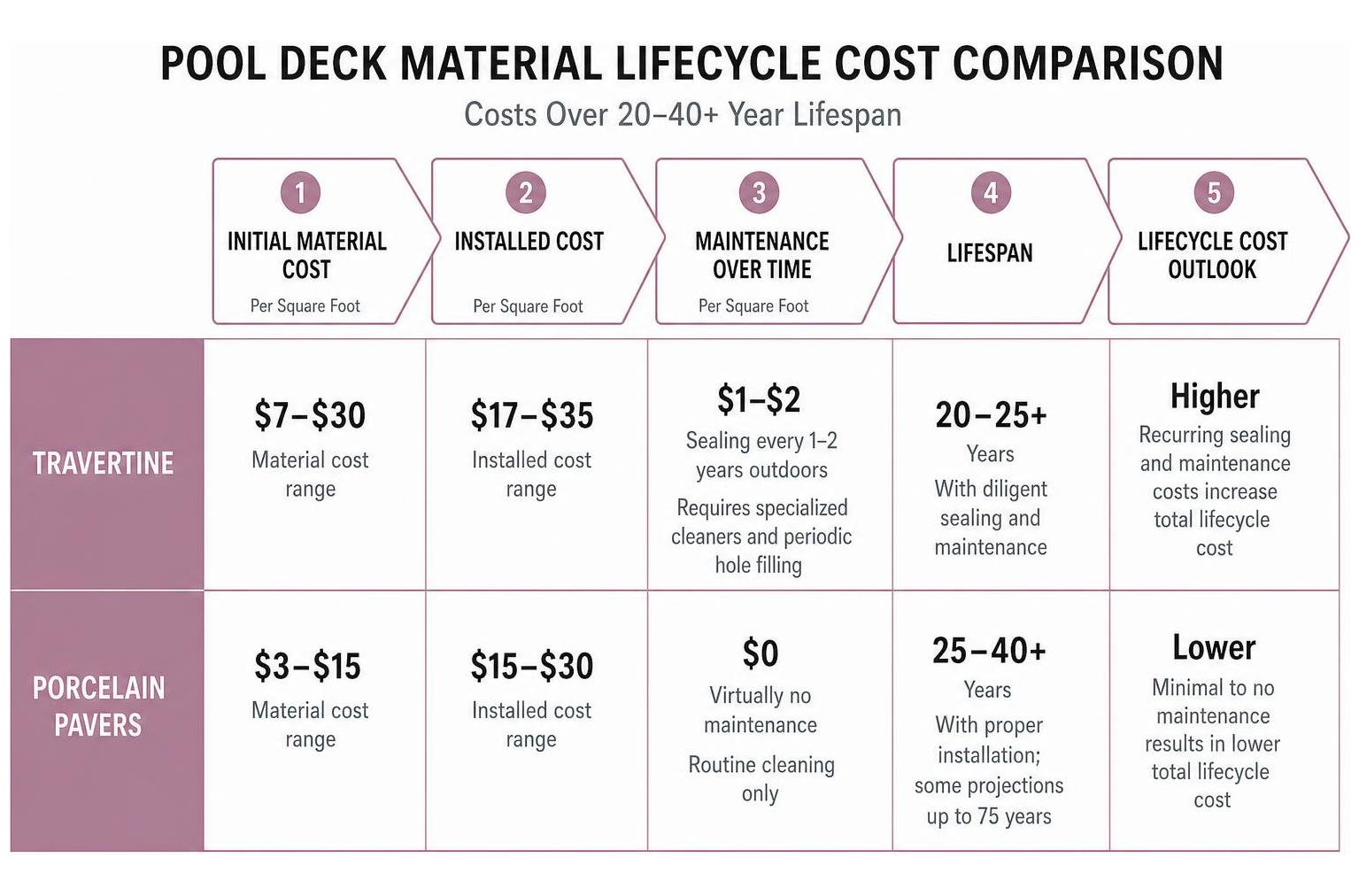
While material and installation costs overlap (travertine typically ranges from $17–$35 per square foot installed, while porcelain averages $15–$30 per square foot), their long-term value diverges significantly due to maintenance:
- Travertine: Rated for 20–25+ years, but requires ongoing sealing ($1–$2 per square foot every 1–2 years) and pH-neutral cleaners, resulting in higher lifecycle costs.
- Porcelain: Rated for 25–40+ years with virtually no maintenance beyond routine washing, making it the more cost-effective investment over its lifespan.
Balancing aesthetic preference, climate, and your willingness to manage ongoing maintenance will ensure your custom pool deck remains a durable, beautiful retreat for decades.
When is your next custom pool construction project?
Sound off, below!
—Matt
PIN FOR LATER:
I am a contractor and just a DIY guy in my spare time. I love building things and sharing my knowledge with other DIY’ers. You can do anything you set your mind to! When I am not building or fixing something, I am all about baseball. Go Tigers, go!