Why Does Your Pond Keep Losing Water? (Causes & How to Fix It)
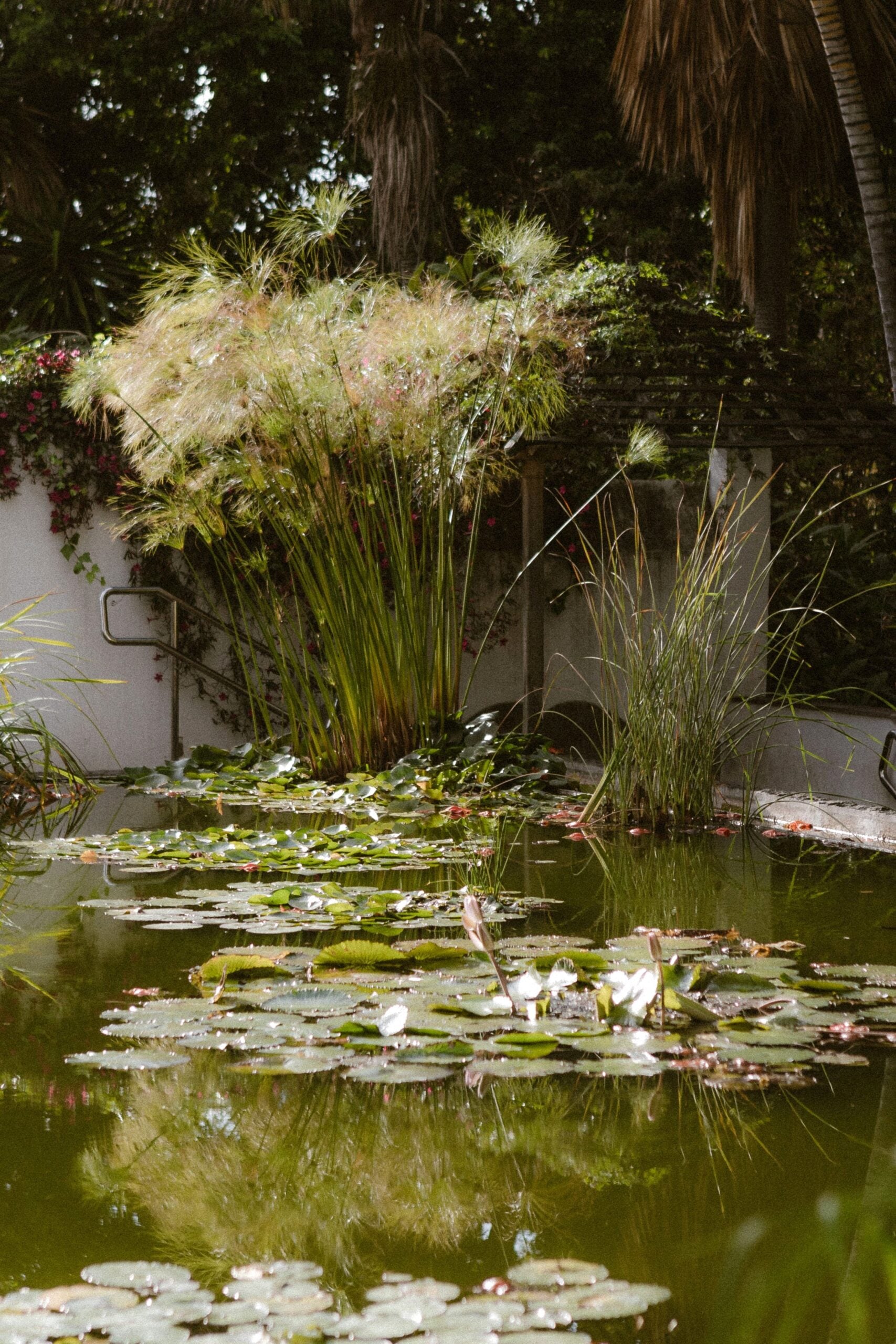
Why Does Your Pond Keep Losing Water?
There’s a particular kind of frustration that comes with watching a backyard or farm pond in Kansas City slowly shrink week after week, especially when you can’t actually see where the water is going.
The shoreline creeps inward, the waterline drops a little more each morning, and you’re left wondering whether this is just summer doing what summer does, or whether something underneath is genuinely wrong.
The good news is that figuring out the difference doesn’t require guesswork, just a clear process for narrowing down what’s actually happening.
How Much Water Loss Is Actually Normal?
It helps to understand the real scale of normal evaporation before assuming the worst. According to Oklahoma State University Extension, shallow ponds in the region can lose anywhere from roughly 28 to over 44 inches of water to evaporation alone.
All during just the six-month period between May and October, depending on location and climate conditions.
That’s a genuinely significant amount of water loss, and it happens with zero leak involved.
Understanding that baseline matters enormously, since a pond that drops several inches over a hot, dry summer isn’t necessarily broken.
It may simply be behaving exactly the way shallow water bodies are expected to behave under normal seasonal conditions.
How to Tell Normal Loss From a Real Leak
The key distinction comes down to whether the water level ever stabilizes. A few signs point toward normal evaporation rather than a structural problem:
- The pond drops during hot, dry weeks but levels off again after rainfall or cooler temperatures
- A newer pond continues to seep slightly as the soil “seats” and fine particles settle into place
- Water loss tracks fairly closely with a simple bucket comparison test placed near the pond
A true leak behaves differently, it stays stubborn.
If the pond keeps dropping during cooler weather or right after a good rain and never finds a stable level, that’s a strong signal there’s an actual leak path rather than ordinary seasonal loss.
What’s Actually Causing the Leak
This is really the middle of the diagnostic process, and where most of the useful clues live. A handful of causes account for the large majority of leaking ponds:
- Poor compaction during original construction, where the pond bottom or dam wasn’t properly compacted, leaving seams and voids water can travel through, sometimes for years before the leak becomes visible
- Permeable soils beneath the surface, such as sand or gravel lenses, that let water migrate even when the visible topsoil looks like solid clay
- Buried organic material like brush, roots, or topsoil left under the pond bottom, which decomposes over time and leaves voids behind
- Muskrat and animal burrows, often the culprit behind a sudden, unexplained drop, especially when paired with a wet area behind the dam or fresh soft spots near the shoreline
- Spillway or overflow problems, where water is escaping through erosion or an uncontrolled overflow path rather than through the pond’s actual seal
Walking the property, particularly checking the downstream side of the dam for persistent wetness, is often more revealing than staring at the water itself.
When It’s Time to Bring in a Professional
If you’ve ruled out normal evaporation and the water level continues to fall, the next step is figuring out whether you’re dealing with pond leaks or another source of water loss.
Persistent leaks that don’t respond to simple observation or DIY patches usually call for a more thorough evaluation.
ICON Grading walks through this diagnostic process on site, checking for compaction issues, burrow activity, and spillway problems before recommending a fix.
Especially since matching the right repair to the actual cause is what determines whether a solution lasts for years or fails again within a season.
Wet ground behind the dam that never dries out, visible burrows or voids, a pond that never stabilizes even after rain, or repeated patch attempts that keep failing are all strong signs the problem has moved past a simple, surface-level fix.
Matching the Right Fix to the Actual Problem
Once the likely cause is identified, the right solution generally becomes clear. Recompaction and clay sealing address seepage tied to poor original construction.
Bentonite can help tighten minor seepage in the right soil conditions, but it won’t fix voids or burrow damage on its own.
Liners work well in highly permeable soils where clay sealing isn’t realistic.
And when the issue is actually overflow or spillway erosion rather than a true leak, regrading and stabilization solve a completely different problem than any sealing product ever could.
Final Thoughts
A pond that keeps losing water isn’t always a mystery, it usually comes down to distinguishing normal seasonal evaporation from a genuine structural leak.
Then matching the fix to whatever’s actually causing the problem.
Given how much water even a healthy pond can lose to ordinary heat and wind, and how differently each underlying cause needs to be addressed, taking the time to properly diagnose the issue before reaching for a quick fix is what actually saves both water and money in the long run.
Does your pond keep losing water?
Drop your comment, below!
—Matt
PIN FOR LATER:
I am a contractor and just a DIY guy in my spare time. I love building things and sharing my knowledge with other DIY’ers. You can do anything you set your mind to! When I am not building or fixing something, I am all about baseball. Go Tigers, go!